
Building a skincare routine can feel overwhelming when you’re just starting out. With endless products, ingredients, and social media trends, it’s easy to wonder where to begin. The truth is, great skincare doesn’t have to be complicated. In fact, the best skincare routine for beginners is often the simplest one.
Whether your goal is clearer skin, better hydration, or a healthy glow, a consistent routine can make a noticeable difference over time. You don’t need a 10-step regimen or a bathroom cabinet full of products. A few well-chosen essentials can help you achieve healthier, more radiant skin over time.
In this guide, you’ll learn exactly how to build a skincare routine for beginners, including the essential steps, how to identify your skin type, the correct order to apply products, and when to introduce active ingredients.
Your Beginner Skincare Routine in One Minute
If you want the simplest possible starting point, begin with this basic routine:
Morning:
- Gentle cleanser (optional if your skin is dry)
- Moisturiser
- Broad-spectrum sunscreen (SPF 30 or higher)
Evening:
- Gentle cleanser
- Moisturiser
That’s it. These three core products—cleanser, moisturiser, and sunscreen—form the foundation of every effective skincare routine.
Why a Simple Skincare Routine Works Best for Beginners
Your skin is your body’s largest organ, and it works hard every day to protect you from environmental stressors like pollution, UV rays, and bacteria. A good skincare routine helps support this natural barrier while addressing your individual skin concerns.
When you’re first starting out, less is more. Using too many products at once can irritate your skin, make it difficult to identify what works, and leave you feeling frustrated.
A simple routine allows you to:
- Build consistency
- Protect your skin barrier
- Monitor how your skin responds
- Avoid unnecessary irritation
- Save money on products you may not need
Consistency matters far more than complexity. A basic routine followed daily will deliver better results than an elaborate one you can’t maintain.
The Only Three Products You Need to Start
Before exploring serums, exfoliants, or treatments, focus on these essentials:
1. Gentle Cleanser
A cleanser removes dirt, excess oil, sunscreen, and impurities from your skin.
Look for:
- Fragrance-free formulas
- Non-stripping ingredients
- Cream or gel textures suited to your skin type
2. Moisturiser
A moisturiser hydrates your skin and supports a healthy skin barrier.
Choose one that:
- Matches your skin type
- Contains hydrating ingredients like glycerin or hyaluronic acid
- Feels comfortable on your skin
3. Sunscreen (morning only)
Daily sunscreen is the most important step in any skincare routine. It protects against premature ageing, sun damage, and skin cancer.
Look for:
- Broad-spectrum protection
- SPF 30 or higher
- A formula you’ll enjoy wearing every day
How to Identify Your Skin Type
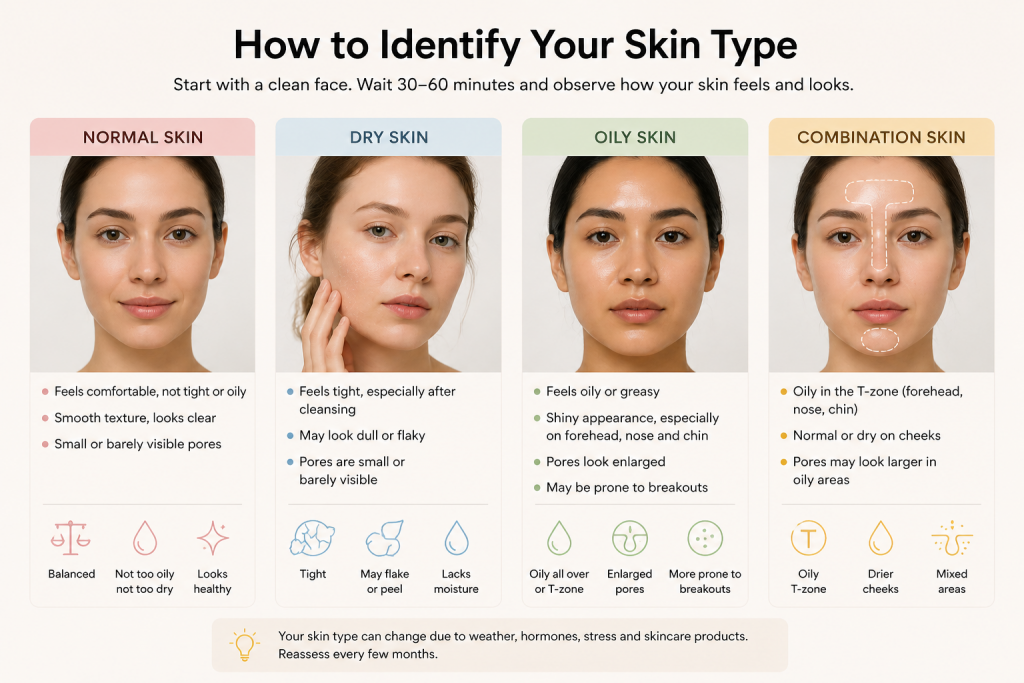
Knowing your skin type helps you choose the right products.
After cleansing, wait 30 minutes without applying anything. Then observe how your skin feels.
- Dry skin: Feels tight, rough, or flaky
- Oily skin: Appears shiny, especially in the T-zone, and may be prone to enlarged pores and breakouts
- Combination skin: Oily in some areas, dry in others
- Sensitive skin: Easily irritated, red, or reactive
- Normal skin: Balanced, comfortable, and not overly oily or dry
Your skin type can change over time due to weather, hormones, age, and lifestyle.
Morning Skincare Routine for Beginners
A morning routine focuses on protection and hydration.
1. Gentle Cleanser
Cleansing removes excess oil, sweat, and impurities that accumulate overnight. Choose a gentle, non-stripping cleanser that cleans your skin without leaving it feeling tight.
- Gel cleansers work well for oily or combination skin
- Cream cleansers are ideal for dry or sensitive skin
If you have oily skin, cleanse in the morning to remove overnight oil buildup. If your skin is dry or sensitive, simply rinsing with water may be enough.
2. Moisturiser
Apply a moisturiser to keep your skin hydrated throughout the day.
Look for:
- Hyaluronic acid for hydration
- Ceramides for barrier support
- Glycerin for moisture retention
Even oily skin needs moisturiser. Lightweight, oil-free formulas work especially well.
3. Sunscreen (SPF 30 or Higher)
Sunscreen is the single most important step in any skincare routine. It protects your skin from harmful UV rays, preventing premature ageing, pigmentation, and skin damage.
Choose a broad-spectrum sunscreen with SPF 30 or higher and apply it every morning, even on cloudy days.
Evening Skincare Routine for Beginners
Your nighttime routine helps cleanse and repair your skin.
1. Cleanser
At night, cleansing removes makeup, sunscreen, dirt, and pollutants that build up throughout the day.
If you wear heavy makeup or waterproof sunscreen, consider double cleansing:
- First cleanse: cleansing balm or oil
- Second cleanse: gentle water-based cleanser
2. Moisturiser
Nighttime is when your skin naturally repairs itself. Applying moisturiser before bed helps replenish hydration and support recovery.
A slightly richer formula can be beneficial, especially for dry skin.
When Should You Add Serums or Active Ingredients?
Once you’ve established a consistent routine for 4-6 weeks, you may choose to add targeted treatments based on your skin concerns.
Popular beginner-friendly active ingredients options include:
Vitamin C
Helps brighten skin and protect against environmental damage. Best used in the morning.
Niacinamide
Helps regulate oil production, minimise pores, and improve skin texture.
Salicylic Acid
Ideal for acne-prone or oily skin, as it helps unclog pores and reduce breakouts.
Hyaluronic acid: Boosts hydration
Retinol
Supports collagen production, improves texture, and reduces fine lines. Best introduced slowly at night.
Important: Introduce only one active ingredient at a time and patch test before full use. This makes it easier to identify any irritation or breakouts.
What Order Should You Apply Skincare Products?
As your routine grows, apply products from thinnest to thickest consistency.
- Cleanser
- Toner (optional)
- Serum
- Spot treatment
- Moisturiser
- Sunscreen (morning only)
A simple rule: lightweight, water-based products go first, while heavier creams go last.
Common Skincare Mistakes Beginners Should Avoid
Using Too Many Products Too Soon
A lengthy routine can overwhelm your skin and make it difficult to identify what’s working.
Skipping Sunscreen
Without sunscreen, you’re undoing much of the progress your skincare routine provides.
Over-Exfoliating
Exfoliating too often can damage your skin barrier, leading to irritation and sensitivity.
Expecting Overnight Results
Skincare takes time. Most products require several weeks of consistent use before visible improvements appear.
Not Patch Testing New Products
Always test new products on a small area of skin before applying them to your face.
Switching Products Too Frequently
Consistency is essential. Give products enough time to work.
Ignoring Your Skin Type
Products should match your skin’s unique needs.
How Long Does It Take to See Results?
Skincare requires patience. While some products provide immediate hydration, most long-term skincare benefits take time.
- Hydration: A few days to one week
- Improved texture: 4–6 weeks
- Brightening and pigmentation: 8-12 weeks
- Reduced breakouts: 4-8 weeks
- Anti-ageing benefits: 3–6 months
Consistency is the secret to lasting results.
How to Choose the Best Skincare Products for Beginners
When shopping for skincare, look for products that are:
- Fragrance-free (especially for sensitive skin)
- Non-comedogenic (won’t clog pores)
- Suitable for your skin type
- Backed by positive reviews and dermatologist recommendations
Avoid being influenced solely by trends or viral products. Focus on ingredients and compatibility with your skin.
How to Build a Sustainable Skincare Habit
The best skincare routine is one you can maintain.
To stay consistent:
- Keep your routine simple
- Store products somewhere visible
- Apply skincare at the same time each day
- Track how your skin responds
- Avoid comparing your progress to others
Healthy skin is built through daily habits, not overnight transformations.
When to See a Dermatologist
If you experience persistent acne, severe sensitivity, eczema, rosacea, or unexplained skin changes, consult a dermatologist. Professional guidance can help you create a routine tailored to your specific needs.
Frequently Asked Questions About Beginner Skincare
What is the best skincare routine for beginners?
A basic routine includes cleanser, moisturiser, and sunscreen in the morning, and cleanser plus moisturiser at night.
Do I need both a morning and night skincare routine?
Yes. Morning skincare protects your skin, while nighttime skincare cleanses and supports repair.
How many skincare products should a beginner use?
Start with three essential products: cleanser, moisturiser, and sunscreen.
When should I start using retinol?
Once your basic routine is established and your skin is comfortable, typically after several weeks.
Can I skip cleanser in the morning?
Yes, especially if you have dry or sensitive skin. A water rinse may be sufficient.
Final Thoughts
Learning how to build a skincare routine for beginners doesn’t have to be complicated. Start simple, stay consistent, and choose products that support your skin’s needs.
A basic routine of cleanser, moisturiser, and sunscreen can transform your skin over time. Once you’ve mastered the essentials, you can gradually introduce targeted treatments to address specific concerns.
Remember, the best skincare routine is the one you can maintain consistently. Healthy, glowing skin is built through patience, not perfection.
Ready to start your skincare journey? Begin with the basics, listen to your skin, and enjoy the process.


