

Have you ever applied your usual skincare products only to find that they suddenly sting, burn, or leave your skin feeling tighter than before?
Perhaps your skin has become unusually dry, flaky, or sensitive, despite using plenty of moisturizers.
In many cases, these symptoms point to a compromised skin barrier—a problem that has become increasingly common due to over-exfoliation, harsh skincare routines, environmental stressors, and ageing.
One of the most effective ways to support skin barrier repair is through ceramides. These naturally occurring lipids make up a significant portion of your skin’s protective barrier and help keep moisture locked in while protecting against irritants, pollutants, and environmental damage.
Whether you’re struggling with dryness, recovering from over-exfoliation, or simply looking to improve your skincare routine, understanding ceramides can help you make smarter choices for your skin.
In this guide, we’ll explore what ceramides are, why they’re essential for skin health, and how to use them effectively for long-term skin barrier repair.
What Are Ceramides?
Ceramides are naturally occurring fats (lipids) found in the outermost layer of your skin. In fact, they make up nearly half of your skin barrier’s lipid composition and play a crucial role in maintaining healthy, hydrated skin.
To understand their importance, imagine your skin barrier as a brick wall:
- Skin cells are the bricks.
- Ceramides are the mortar that holds those bricks together.
Without enough mortar, the wall becomes weak and vulnerable. Similarly, when ceramide levels decline, your skin barrier becomes less effective at retaining moisture and protecting against environmental irritants.
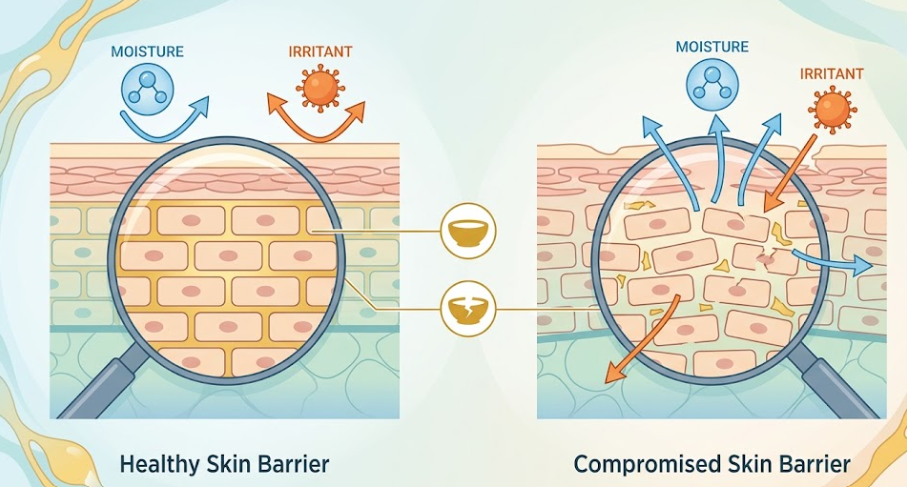
This process contributes to a range of skin concerns, including:
- Dryness
- Redness
- Sensitivity
- Itching
- Flaking
- Premature signs of aging
A healthy supply of ceramides helps keep skin smooth, hydrated, and protected from external stressors such as pollution, harsh weather, and allergens. Ceramides are therefore not just another moisturizing ingredient—they are a fundamental component of healthy skin.
What Is the Skin Barrier?
Your skin barrier, also known as the stratum corneum, is the body’s first line of defense against the outside world.
Its primary functions include:
- Preventing moisture loss
- Protecting against environmental stressors such as bacteria, allergens, pollution and harsh weather
- Reducing sensitivity to irritants
- Supporting overall skin health
When the skin barrier is functioning properly, skin feels soft, comfortable, and balanced. However, when it’s damaged, moisture escapes more easily and irritants can penetrate the skin more readily.
Many people assume they simply need a richer moisturizer when these symptoms appear. While moisturizing helps, repairing the barrier itself is often the real solution—and that’s where ceramides come in.
7 Signs Your Skin Barrier Is Damaged
One of the biggest misconceptions in skincare is assuming every skin problem requires a new active ingredient.
Sometimes what your skin actually needs is less treatment and more repair.
Common signs of skin barrier damage include:
1. Tightness After Cleansing
Your face feels uncomfortable immediately after washing.
2. Persistent Dryness
Moisturizer helps temporarily but the dryness quickly returns.
3. Redness and Irritation
Even gentle products begin causing discomfort.
4. Stinging Skincare Products
Products you’ve used for years suddenly burn.
5. Flaking and Rough Texture
The skin surface becomes uneven and dry.
6. Increased Sensitivity
Your skin reacts more easily to environmental triggers.
7. Oily Yet Dehydrated Skin
The skin produces excess oil while still feeling tight underneath.
If several of these symptoms sound familiar, strengthening your barrier should become a priority.
What Causes Ceramide Levels to Decline?
Although your skin naturally produces ceramides, several factors can reduce their levels over time.
Aging
As we get older, natural ceramide production gradually decreases. This decline contributes to the dryness and increased sensitivity commonly associated with aging skin.
Over-Exfoliation
Chemical exfoliants such as AHAs, BHAs, and retinoids can be highly effective when used correctly. However, excessive use can disrupt the skin barrier and deplete protective lipids.
Harsh Cleansers
Some cleansers strip away natural oils and barrier-supporting lipids, leaving skin vulnerable to moisture loss.
Environmental Stress
Cold weather, wind, low humidity, pollution, and UV exposure can weaken barrier function.
Skin Conditions
People with conditions such as eczema, rosacea, and chronic dry skin often have lower ceramide levels than those with healthy skin.
The result is a weakened barrier that struggles to retain moisture and defend against irritants.
The Top Benefits of Ceramides for Skin
1. Strengthen the Skin Barrier
One of the primary roles of ceramides is reinforcing the skin’s natural protective barrier.
When applied topically, ceramide-rich products help replenish lost lipids and support barrier recovery, especially after exposure to harsh skincare ingredients or environmental stress.
2. Reduce Moisture Loss
A compromised barrier allows water to escape through a process known as transepidermal water loss (TEWL).
Ceramides help seal gaps in the barrier, reducing moisture loss and keeping skin hydrated for longer periods.
3. Improve Skin Hydration
Because they help prevent water loss, ceramides naturally improve hydration levels.
Many people notice that their skin feels softer, smoother, and more comfortable after incorporating ceramide products into their routine.
4. Calm Irritation and Sensitivity
A damaged barrier often causes redness, itching, and sensitivity.
By restoring barrier integrity, ceramides can help reduce irritation and improve overall skin comfort.
5. Support Healthy Aging
Hydrated, resilient skin tends to look healthier and more youthful.
While ceramides are not anti-aging ingredients in the traditional sense, they help maintain skin quality and reduce the dryness that can accentuate fine lines.
Who Should Use Ceramides?
The short answer: almost everyone.
Ceramides benefit all skin types because every skin barrier relies on them to function properly.
However, they can be particularly helpful for:
Dry Skin
If your skin frequently feels tight or flaky, ceramides can help restore lost moisture and improve comfort.
Sensitive Skin
People with easily irritated skin often benefit from strengthening their skin barrier rather than continuously adding active ingredients.
Mature Skin
Since natural ceramide production declines with age, replenishing ceramides can help support healthier-looking skin.
Eczema-Prone Skin
Many dermatologists recommend ceramide-containing moisturizers for individuals managing eczema symptoms.
Retinol Users
Retinoids are highly effective but can sometimes compromise the barrier during the adjustment period. Ceramides help counteract dryness and irritation.
Over-Exfoliated Skin
If you’ve overdone the acids or scrubs, ceramides can help support recovery.
Different Types of Ceramides Explained
When reading ingredient labels, you’ll often encounter multiple ceramide names.
Ceramide NP
One of the most common forms used in moisturizers.
Helps improve moisture retention and barrier function.
Ceramide AP
Supports barrier repair and hydration.
Ceramide EOP
Helps improve skin resilience and structural integrity.
Phytoceramides
Plant-derived ceramides commonly found in supplements and some skincare products.
Which Type Is Best?
Most experts recommend products containing multiple ceramides rather than relying on a single type.
Why Ceramides Alone Aren’t Enough
One of the most overlooked aspects of skin barrier repair is that ceramides work best alongside cholesterol and fatty acids.
Together, these three components form the skin’s natural lipid matrix.
Think of them as a repair team:
- Ceramides strengthen the structure
- Cholesterol improves flexibility
- Fatty acids support barrier integrity
This is why many dermatologist-recommended moisturizers include all three ingredients.
How to Use Ceramides in Your Skincare Routine
One of the biggest advantages of ceramides is that they’re easy to incorporate into almost any skincare routine.
Morning Routine
- Gentle cleanser
- Hydrating serum
- Ceramide moisturizer
- Broad-spectrum sunscreen
Evening Routine
- Gentle cleanser
- Treatment serum (if desired)
- Ceramide moisturizer
If your skin barrier is significantly compromised, simplifying your routine for a few weeks can be beneficial.
Focus on:
- Gentle cleansing
- Hydration
- Barrier repair
- Sun protection
Avoid introducing multiple active ingredients until your skin feels healthy again.
Ingredients That Work Well With Ceramides
Ceramides are effective on their own, but they work even better when paired with complementary ingredients.
Hyaluronic Acid
Hyaluronic acid attracts water to the skin, while ceramides help keep that moisture from escaping.
Together, they create a powerful hydration combination.
| Ceramides | Hyaluronic Acid |
|---|---|
| Prevent moisture loss | Attract moisture |
| Repair barrier function | Increase hydration |
| Best for damaged barriers | Best for dehydration |
| Lipid-based | Humectant |
The most effective routines often include both.
Niacinamide
Niacinamide supports barrier function, reduces redness, and may help encourage natural ceramide production.
Ceramides
- Directly replenish barrier lipids
- Reduce moisture loss
- Strengthen barrier structure
Rather than choosing between them, many people benefit from using both.
Glycerin
This humectant draws moisture into the skin and works exceptionally well alongside ceramides.
Cholesterol
Cholesterol is another naturally occurring barrier lipid.
Products that combine ceramides, cholesterol, and fatty acids often provide the most effective barrier support.
Fatty Acids
Fatty acids help strengthen the lipid matrix that protects the skin from moisture loss.
How to Choose the Best Ceramide Products
Not all ceramide products are formulated equally.
When shopping for skincare, look for products that contain:
- Ceramide NP
- Ceramide AP
- Ceramide EOP
- Cholesterol
- Fatty acids
You may also want to choose formulas that are:
- Fragrance-free
- Non-comedogenic
- Suitable for sensitive skin
- Dermatologist-tested
Products that combine multiple barrier-supporting ingredients generally deliver better results than those relying on a single ingredient.
30-Day Skin Barrier Recovery Plan
Week 1: Simplify
- Gentle cleanser
- Ceramide moisturizer
- Sunscreen
- Pause exfoliants
Week 2: Hydrate
- Add a hydrating serum
- Continue barrier-supportive products
Week 3
- Evaluate sensitivity levels
- Maintain consistency
Week 4
- Slowly reintroduce active ingredients if needed
- Continue daily ceramide use
Frequently Asked Questions
Can I Use Ceramides Every Day?
Yes. Ceramides are gentle enough for daily use and can be applied both morning and evening.
Are Ceramides Safe for Acne-Prone Skin?
Generally, yes. Many ceramide moisturizers are specifically formulated to support acne-prone skin without clogging pores.
How Long Does It Take to Repair a Damaged Skin Barrier?
Mild barrier damage may improve within a few weeks, while more severe damage can take several months to fully recover.
Consistency is key.
Can Ceramides Be Used With Retinol?
Absolutely.
In fact, combining ceramides with retinol is one of the best ways to minimize irritation and maintain healthy skin.
Final Thoughts
When it comes to healthy skin, a strong barrier is everything.
Ceramides play a vital role in maintaining that barrier by locking in moisture, reducing sensitivity, and protecting against environmental stressors. Whether you’re dealing with dryness, irritation, over-exfoliation, or age-related moisture loss, adding ceramides to your skincare routine can help restore balance and improve overall skin health.
While trendy ingredients often steal the spotlight, ceramides remain one of the most evidence-backed and dermatologist-recommended ingredients for long-term skin barrier repair.
If your skin has been feeling stressed, sensitive, or dehydrated, a quality ceramide moisturizer could be one of the most effective additions to your routine.


