
Have you ever bought a skincare product that promised glowing, healthy skin—only to find it left your face greasy, irritated, or even drier than before? The problem may not be the product itself. It could simply be that it wasn’t designed for your skin type.
Knowing your skin type is the first and most important step in building an effective skincare routine. When you understand whether your skin is oily, dry, combination, normal, or sensitive, you can choose products that truly work for your skin’s unique needs.
With a few simple observations and an easy at-home test, you can identify your skin type accurately and start choosing products that truly support your skin.
In this guide, you’ll learn how to determine your skin type at home using two simple methods, understand the differences between skin types and skin conditions, and discover the best ingredients for your unique complexion.
Why Knowing Your Skin Type Matters
Your skin type influences how your skin behaves, how it reacts to ingredients, and what kind of care it needs. Using products designed for the wrong skin type can lead to a range of issues, including breakouts, irritation, dryness and flaking, or excess oil production.
For example, if you have dry skin and use harsh oil-control cleansers, your skin may become even more dehydrated and essential moisture can be stripped away. On the other hand, if you have oily skin and use heavy, rich creams, you may experience clogged pores and increased shine.
Once you know your skin type, you can:
- Choose products that address your skin’s specific needs
- Avoid ingredients that may cause irritation or imbalance
- Create a skincare routine that delivers better results
- Save money by investing in products that actually work
Skin Type vs Skin Condition: What’s the Difference?
This is one of the most common skincare misconceptions.
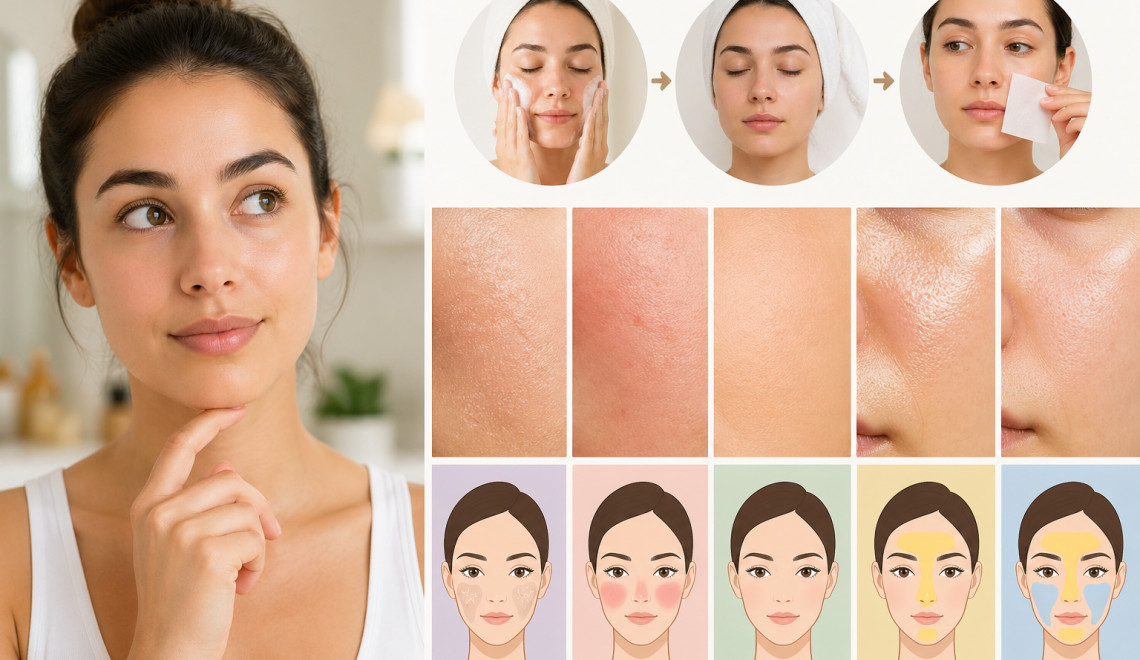
Skin type is your skin’s natural, long-term classification. It’s largely determined by genetics and usually falls into one of five categories: normal, dry, oily, combination, or sensitive.
Skin condition, on the other hand, is temporary and can change based on factors like weather, hormones, stress, diet, or skincare habits.
For example:
- Dry skin lacks oil naturally.
- Dehydrated skin lacks water temporarily.
- Oily skin produces excess sebum.
- Acne-prone skin can occur with any skin type.
- Sensitive skin may be a permanent trait or a temporary reaction.
Understanding this difference is essential for choosing the right products and treatments.
The Five Main Skin Types
Before testing your skin, it’s helpful to understand the five primary skin types.
Normal Skin
Normal skin is well-balanced. It typically feels comfortable, neither too oily nor too dry. Pores are usually small or barely visible, and the skin has a smooth, even texture.
Common characteristics include:
- Minimal sensitivity
- Few blemishes or breakouts
- Soft, smooth texture
- A healthy, even complexion
Oily Skin
Oily skin produces excess sebum, the natural oil secreted by your sebaceous glands. While sebum helps protect the skin, too much can lead to shine, enlarged pores, and acne.
Signs of oily skin include:
- Noticeable shine, especially in the T-zone
- Enlarged or visible pores
- Frequent breakouts or blackheads
- Makeup that slides off easily
Dry Skin
Dry skin lacks sufficient oil than normal skin, and often struggles to retain moisture. It may feel tight, rough, or flaky, especially after cleansing.
Typical signs include:
- Tightness after washing
- Flaking or peeling
- Dull appearance
- Rough patches or sensitivity
Combination Skin
Combination skin features both oily and dry areas. Typically, the T-zone (forehead, nose, and chin) is oily, while the cheeks remain normal or dry.
Common traits include:
- Oily T-zone
- Dry or normal cheeks
- Enlarged pores in some areas only
- Occasional breakouts, usually around the nose and forehead
Sensitive Skin
Sensitive skin is easily irritated by environmental factors, skincare products, or certain ingredients. It can coexist with any of the other skin types.
Signs of sensitive skin include:
- Redness or flushing
- Burning or stinging after product use
- Itching or irritation
- Reactions to fragrances or active ingredients
How to Identify Your Skin Type at Home
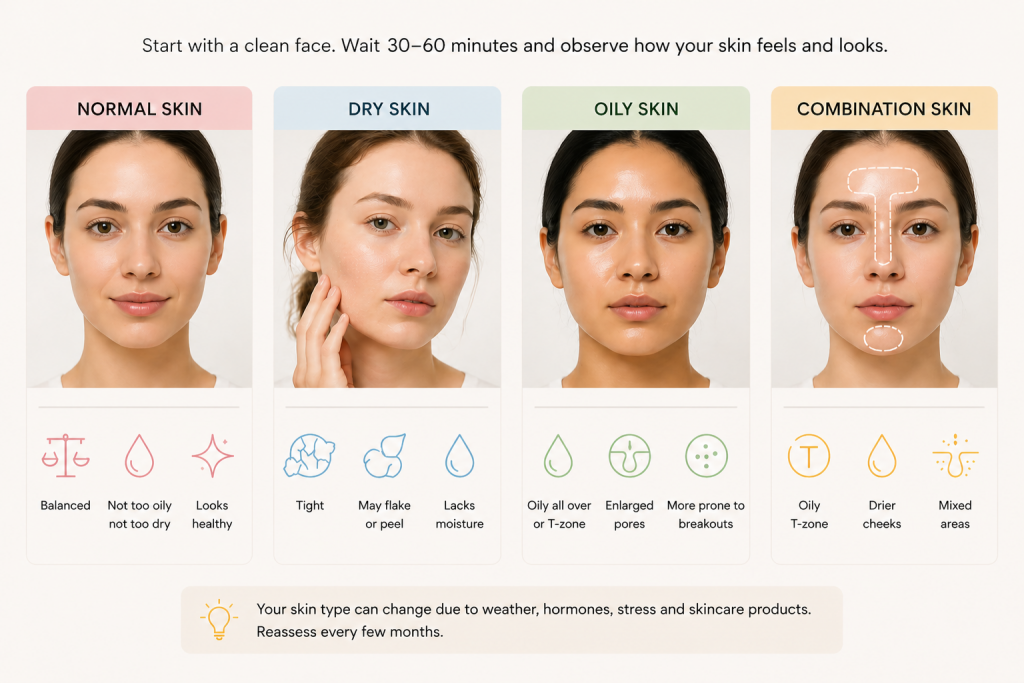
One of the easiest and most reliable ways to determine your skin type is the bare-face method.
Method 1: The Bare-Face Test
This is the most reliable way to determine your skin type at home.
Step 1: Cleanse Your Face
Wash your face with a gentle, fragrance-free cleanser. Avoid using any exfoliants, serums, moisturisers, or treatments afterward. Pat your face dry with a soft towel.
Step 2: Wait 30 minutes
Leave your skin completely bare for about 30 minutes. During this time, avoid touching your face or applying any products.
This allows your skin to return to its natural state, making it easier to assess its oil production and moisture levels.
Step 3: Observe Your Skin
Examine your skin in natural light. Pay attention to how it looks and feels.
Ask yourself:
- Does your skin feel tight or comfortable?
- Is there visible shine?
- Are some areas oily while others feel dry?
- Do you notice redness or irritation?
What Your Results Mean
- Feels tight or flaky: Dry skin
- Shiny all over: Oily skin
- Shiny in T-zone only: Combination skin
- Comfortable and balanced: Normal skin
- Red, itchy, or irritated: Sensitive skin
Method 2: The Blotting Sheet Test
For an even clearer assessment, use blotting papers on different areas of your face.
Gently press a blotting sheet against your forehead, nose, cheeks, and chin.
Then examine how much oil is absorbed.
- Little to no oil: Dry skin
- Oil from T-zone only: Combination skin
- Oil from most areas: Oily skin
- Minimal oil with balanced feel: Normal skin
The Blotting Sheet Test
For an even clearer assessment, use blotting papers on different areas of your face. This quick test is especially helpful for distinguishing oily and combination skin.
Gently press a blotting sheet against your forehead, nose, cheeks, and chin.
Then, hold it up to the light and examine how much oil is absorbed.
- Little to no oil: Dry skin
- Oil from T-zone only: Combination skin
- Oil from most areas: Oily skin
- Minimal oil with balanced feel: Normal skin
How to Confirm If You Have Sensitive Skin
Sensitive skin isn’t always obvious from oil production alone. Consider how your skin reacts to products and environmental changes.
You may have sensitive skin if:
- New products frequently cause stinging or redness
- Your skin reacts to fragrance or alcohol-based formulas
- Weather changes trigger irritation
- You often experience itching or inflammation
If sensitivity is severe or persistent, consulting a dermatologist is a wise next step.
Quick Skin Type Quiz
Answer these questions:
- How does your skin feel after cleansing?
- Tight or dry
- Comfortable
- Oily within an hour
- By midday, your skin is:
- Still matte
- Shiny in the T-zone
- Shiny all over
- How often do you experience irritation?
- Rarely
- Occasionally
- Frequently
- Your pores are:
- Small and barely visible
- Noticeable in the T-zone
- Large and visible throughout
Your answers can help confirm your results from the at-home tests.
Best Ingredients for Each Skin Type
- Oily skin: Niacinamide, salicylic acid, clay
- Dry skin: Hyaluronic acid, ceramides, squalane, glycerin
- Sensitive skin: Colloidal oatmeal, aloe vera, centella asiatica, ceramides
- Combination skin: Niacinamide, hyaluronic acid
- Normal skin: Antioxidants like vitamin C and green tea
Ingredients to Avoid by Skin Type
- Dry skin: Alcohol-based products, harsh exfoliants
- Oily skin: Heavy occlusive oils (if acne-prone)
- Sensitive skin: Fragrance, essential oils, strong acids
- Combination skin: Overly stripping cleansers
Can Your Skin Type Change Over Time?
Yes, your skin can evolve throughout your life.
Factors that can affect your skin include:
- Age
- Hormonal changes
- Climate and seasons
- Stress levels
- Diet
- Medications
- Pregnancy
- Menopause
For example, oily skin in your teens may become combination or dry as you age.
This is why it’s important to reassess your skin periodically.
Common Mistakes When Identifying Skin Type
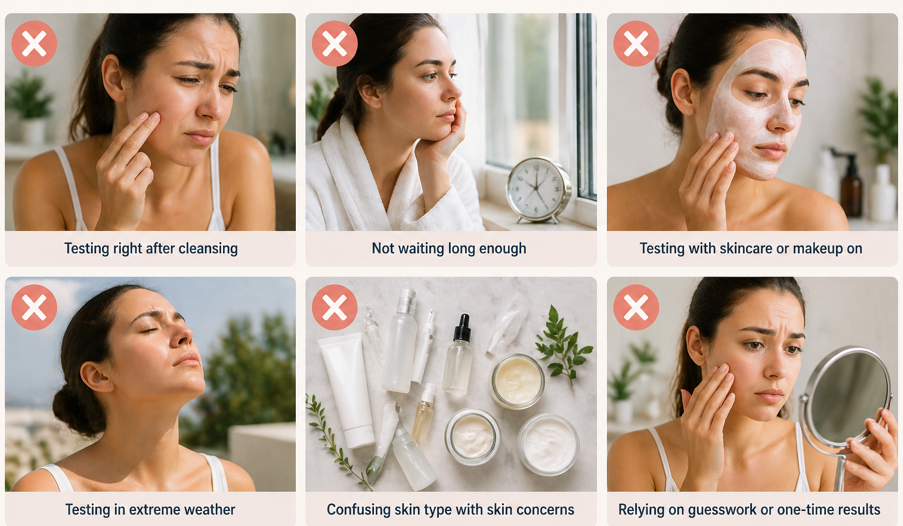
Many people misidentify their skin type because temporary conditions can mimic different skin concerns.
Dehydrated Skin vs Dry Skin
Dehydrated skin lacks water, while dry skin lacks oil. Even oily skin can become dehydrated.
Signs of dehydration include:
- Tightness despite oiliness
- Dullness
- Fine lines appearing more noticeable
Seasonal Changes
Your skin may become drier in winter and oilier in summer. Reassess your skin periodically to ensure your routine still meets its needs.
Overusing Active Ingredients
Excessive use of retinoids, acids, or harsh cleansers can disrupt your skin barrier, making your skin feel dry, irritated, or sensitive.
Here are some common mistakes:
- Testing immediately after cleansing
- Using harsh cleansers before testing
- Confusing dehydration with dryness
- Assuming acne means oily skin
- Ignoring sensitivity as a separate concern
- Judging skin during hormonal fluctuations
For the most accurate results, test your skin on a typical day when it’s not irritated or influenced by new products.
Building a Skincare Routine Based on Your Skin Type
Once you’ve identified your skin type, you can create a routine tailored to your needs.
Basic Routine for All Skin Types
- Gentle cleanser
- Targeted serum
- Moisturiser
- Broad-spectrum SPF (morning only)
Your choice of products should depend on your skin’s unique needs.
For Normal Skin
Focus on maintaining balance with:
- Gentle cleanser
- Lightweight moisturiser
- Broad-spectrum SPF 30+
For Oily Skin
Choose products that help regulate excess oil without stripping the skin:
- Gel or foaming cleanser
- Oil-free moisturiser
- Non-comedogenic sunscreen
For Dry Skin
Look for nourishing, hydrating ingredients such as hyaluronic acid, ceramides, and glycerin.
- Cream cleanser
- Rich moisturiser
- Hydrating sunscreen
For Combination Skin
Use balanced products that hydrate dry areas while controlling shine.
- Gentle gel cleanser
- Lightweight moisturiser
- Optional multi-masking for different zones
For Sensitive Skin
Keep your routine simple and soothing.
- Fragrance-free cleanser
- Barrier-supporting moisturiser
- Mineral sunscreen
Frequently Asked Questions
Can skin type change over time?
Yes. Hormones, age, weather, stress, and lifestyle habits can all affect your skin type.
How often should I reassess my skin type?
Every 6 to 12 months, or whenever you notice significant changes in your skin.
Can I have both oily and sensitive skin?
Absolutely. Sensitive skin can occur alongside oily, dry, normal, or combination skin.
Should I see a dermatologist to confirm my skin type?
If you have persistent irritation, severe acne, rosacea, or chronic skin concerns, a dermatologist can provide personalised guidance.
What’s the difference between dry and dehydrated skin?
Dry skin lacks oil, while dehydrated skin lacks water. Dehydration is a temporary condition that can affect any skin type.
Is the bare-face test accurate?
Yes, it’s one of the easiest and most reliable at-home methods for identifying skin type.
Final Thoughts
Identifying your skin type is one of the simplest yet most powerful steps you can take for healthier skin. Once you understand whether your skin is normal, dry, oily, combination, or sensitive, you’ll be able to choose products that support—not fight—your skin.
Remember, your skin type may change over time, so it’s worth reassessing it periodically. By paying attention to how your skin behaves and using the simple tests outlined above, you can build a skincare routine that truly works.
The result? Healthier, happier skin—and far fewer wasted skincare purchases.


