
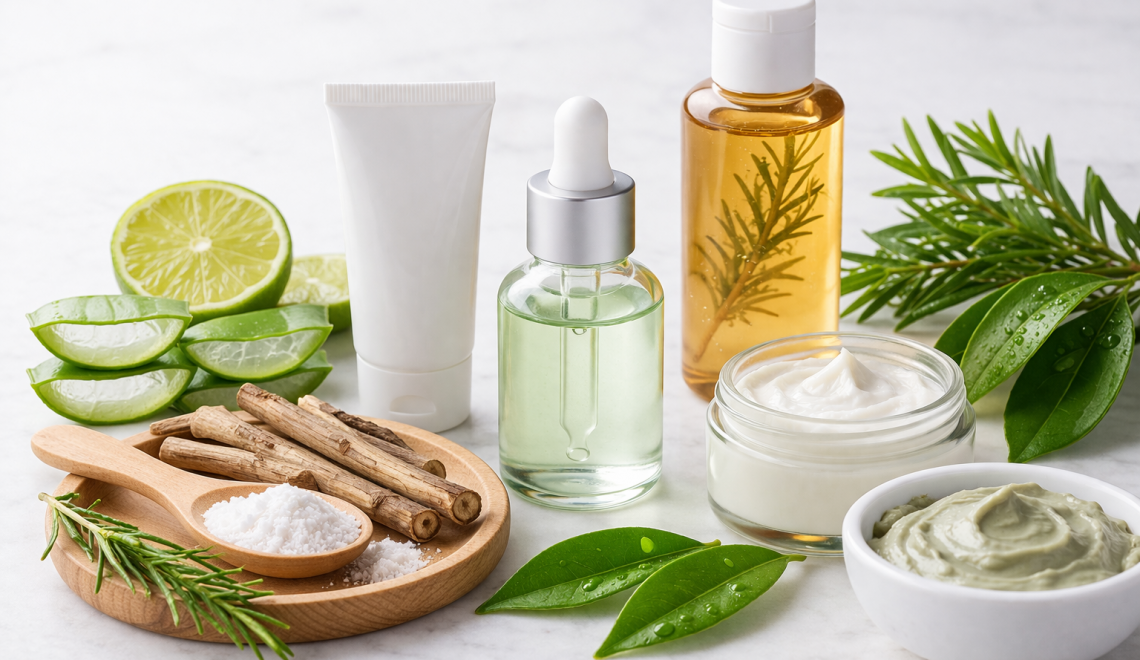
Acne is one of the most common skin concerns worldwide, affecting both teenagers and adults. From stubborn blackheads to inflamed breakouts, finding a solution that actually works—without damaging your skin or the environment—can feel overwhelming.
One ingredient that consistently comes up in skincare conversations is salicylic acid. You’ve probably seen it in cleansers, toners, and spot treatments—but how exactly does it work, and is it the best choice for your skin (and the planet)?
In this guide, we’ll break down everything you need to know—so you can make informed, balanced choices for both your skin and your wellbeing.
What Does Salicylic Acid Do for Acne? (Quick Answer)
Salicylic acid helps treat acne by penetrating deep into pores, dissolving excess oil and dead skin cells, and reducing inflammation. It is most effective for blackheads and whiteheads and works best on oily or acne-prone skin.
Salicylic Acid for Acne: Quick Facts
- Type: Beta hydroxy acid (BHA)
- Best for: Oily and acne-prone skin
- Targets: Blackheads, whiteheads, clogged pores
- Typical strength: 0.5%–2%
- Time to work: 2–6 weeks
- Use frequency: 2–4 times per week (start slow)
What Is Salicylic Acid?
Salicylic acid is a type of beta hydroxy acid (BHA) derived from willow bark. Unlike water-soluble acids, BHAs are oil-soluble, which means they can penetrate deep into the pores of your skin, rather than just exfoliating the surface of the skin.
This makes salicylic acid especially effective for people with:
- Oily skin
- Acne-prone skin
- Blackheads and clogged pores
You’ll commonly find salicylic acid in:
- Facial cleansers
- Toners
- Serums
- Spot treatments
How Does Salicylic Acid Work for Acne?
To understand why salicylic acid is so popular, it helps to look at how it targets acne at the root.
1. Unclogs Pores
Salicylic acid works by dissolving the mixture of oil (sebum) and dead skin cells that clog pores – one of the main causes of acne. Think of it like clearing out a blocked drain—it removes the build-up that leads to blackheads and breakouts.
2. Reduces Inflammation
Salicylic acid has natural anti-inflammatory properties, helping to calm redness, swelling, and irritated breakouts.
3. Prevents Future Breakouts
By keeping pores clear and reducing oil buildup, salicylic acid helps prevent new spots from forming. This makes it a great long-term solution for managing mild to moderate acne.
How Long Does Salicylic Acid Take to Work?
Results with salicylic acid don’t happen overnight.
Most people begin to see improvements within 2 to 6 weeks of consistent use. However, your skin may go through an initial adjustment phase.
What to expect:
- Week 1–2: Possible dryness or mild purging
- Week 3–4: Fewer clogged pores
- Week 5–6: Noticeable reduction in breakouts
Consistency is key. Using it too frequently too soon can lead to irritation rather than faster results.
What Percentage of Salicylic Acid Should You Use?
The effectiveness of salicylic acid depends heavily on its concentration.
Common OTC Strengths:
- 0.5% – Gentle, ideal for sensitive skin
- 1% – Moderate strength for mild acne
- 2% – Stronger, commonly used for oily/acne-prone skin
Beginner Tip:
Start with a lower concentration and gradually increase if your skin tolerates it well.
Higher percentages are not always better—they often increase the risk of irritation without significantly improving results.
Benefits of Salicylic Acid for Skin
Salicylic acid offers several targeted benefits, especially for acne-prone skin:
- Clears blackheads and whiteheads
- Reduces excess oil production
- Smooths uneven skin texture
- Minimises the appearance of pores
- Helps fade post-acne marks over time
Because of its deep-penetrating ability, it’s often more effective for clogged pores than surface-level exfoliants.
Potential Side Effects (And Who Should Avoid It)
While effective, salicylic acid isn’t suitable for everyone.
Common Side Effects
- Dryness
- Peeling
- Redness or irritation
These are more likely if you:
- Use high concentrations
- Apply it too frequently
- Combine it with other strong actives
Who Should Be Cautious?
- People with sensitive skin
- Those with very dry or compromised skin barriers
- Individuals using multiple exfoliating products
- People prone to conditions like eczema or rosacea
If your skin feels tight, stings, or becomes flaky, it may be a sign you’re overusing it.
If you’re pregnant or breastfeeding, it’s always best to consult a healthcare professional before using active ingredients like salicylic acid.
Who Should Use Salicylic Acid for Acne?
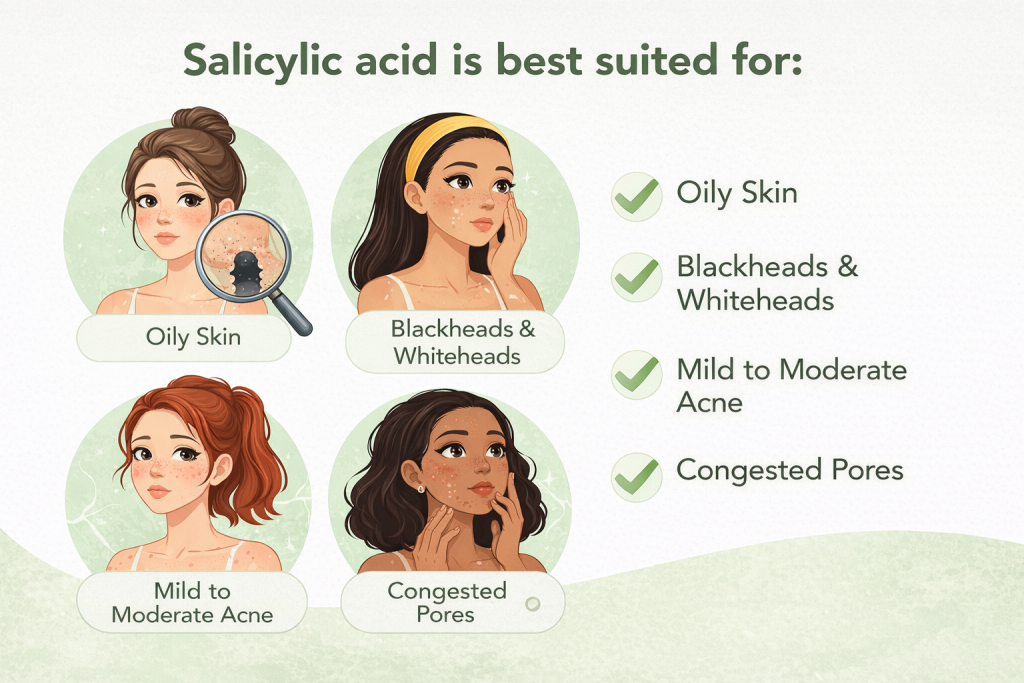
Not ideal for:
- Very dry or sensitive skin
- Skin with a damaged barrier
- Rosacea-prone skin
Can Salicylic Acid Make Acne Worse?
Yes, salicylic acid can sometimes make acne appear worse at first. This is known as skin purging, where clogged pores come to the surface more quickly.
Signs of purging:
- Small breakouts in usual acne areas
- Occurs within the first 1–2 weeks
- Improves with continued use
When it’s NOT purging:
- Severe irritation
- Burning or stinging
- Breakouts in new areas
If irritation occurs, reduce usage or stop completely.
Common Mistakes When Using Salicylic Acid
Many people don’t see results—not because the ingredient doesn’t work, but because it’s used incorrectly.
1. Using It Too Often
Daily use (especially at 2%) can lead to irritation and worsen breakouts.
2. Mixing Too Many Actives
Combining with retinol, AHAs, or physical scrubs can damage your skin barrier.
3. Skipping Moisturiser
Hydration is essential to maintain a healthy skin barrier.
4. Expecting Instant Results
Acne treatment takes time—overusing products won’t speed things up.
How to Use Salicylic Acid Safely
To get the best results while protecting your skin:
Simple Routine Example
Morning:
- Gentle cleanser
- Moisturiser
- SPF
Evening:
- Cleanser
- Salicylic acid treatment (2–3 times per week)
- Moisturiser
Key Tips:
- Start 2–3 times per week
- Avoid combining with strong actives
- Always use sunscreen
- Always follow with a moisturiser to maintain your skin barrier
Can You Use Salicylic Acid With Other Ingredients?
Salicylic acid can be combined with some ingredients—but not all.
✅ Safe combinations:
- Niacinamide (reduces irritation)
- Hyaluronic acid (hydrates skin)
- Ceramides (support skin barrier)
⚠️ Avoid combining with:
- Retinol (can cause irritation)
- Strong AHAs (over-exfoliation risk)
- Benzoyl peroxide (may dry skin excessively)
Is Salicylic Acid Eco-Friendly?
This is where things get interesting—especially if you’re trying to build a more sustainable skincare routine.
Although salicylic acid can be derived from natural sources like willow bark, most modern formulations are synthetically produced in labs for consistency and cost-effectiveness.
Environmental Considerations
- Production processes may involve chemical synthesis
- Packaging waste contributes to environmental pollution
- Overconsumption driven by fast skincare trends
There’s also growing awareness around how excessive exfoliation may disrupt both:
- Wider environmental ecosystems
- Your skin microbiome
If you’re aiming for a more eco-conscious lifestyle, it’s worth considering not just what you use—but how often and why.
Eco-Friendly Alternatives to Salicylic Acid
If you prefer a gentler or more sustainable approach, there are several effective alternatives.
Willow Bark Extract
A natural source of salicin, offering similar benefits in a milder form.
Best for:
- Sensitive skin
- Gentle exfoliation
Lactic Acid (AHA)
Lactic acid is an alpha hydroxy acid that exfoliates the surface of the skin while also providing hydration.
Best for:
- Dry or sensitive skin
- Uneven texture
- Dull complexion
Unlike salicylic acid, it doesn’t penetrate as deeply—but that can be a benefit if your skin is easily irritated.
Lactic Acid (AHA)
Lactic acid is an alpha hydroxy acid that exfoliates the surface of the skin while also providing hydration.
Best for:
- Dry or sensitive skin
- Uneven texture
- Dull complexion
Unlike salicylic acid, it doesn’t penetrate as deeply—but that can be a benefit if your skin is easily irritated.
Tea Tree Oil
A well-known natural antibacterial ingredient, tea tree oil can help reduce acne-causing bacteria.
Benefits:
- Targets active breakouts
- Reduces inflammation
- Works well as a spot treatment
⚠️ Always dilute before use to avoid irritation.
Clay (Kaolin or Bentonite)
Clay masks are a simple, natural way to manage oily skin and unclog pores.
How they help:
- Absorb excess oil
- Draw out impurities
- Reduce shine
They’re also widely available in eco-friendly packaging options.
Bakuchiol
Bakuchiol is a plant-based ingredient often compared to retinol, but it also offers benefits for acne-prone skin.
Why consider it:
- Supports skin renewal
- Gentle and non-irritating
- Suitable for sensitive skin
Salicylic Acid vs Natural Alternatives: Which Is Better?
Here’s a quick comparison to help you decide:
| Feature | Salicylic Acid | Natural Alternatives |
|---|---|---|
| Strength | Strong | Gentle |
| Speed | Fast results | Slower results |
| Skin Types | Oily, acne-prone | Sensitive, dry |
| Sustainability | Moderate | Higher |
| Irritation Risk | Medium–High | Low |
The Bottom Line
- Choose salicylic acid for faster, targeted results
- Choose natural alternatives for a gentler, long-term approach
Final Thoughts: Should You Use Salicylic Acid?
Salicylic acid can be incredibly effective for treating acne, especially if you struggle with oily skin and clogged pores. However, it’s not a one-size-fits-all solution.
If your skin is sensitive, easily irritated, or you’re aiming for a more eco-conscious routine, natural alternatives can offer a gentler and more sustainable path to clearer skin.
Ultimately, the best skincare routine is one that:
- Supports your skin barrier
- Aligns with your values
- Is consistent and simple
Healthy skin isn’t about using the strongest ingredients—it’s about using the right ones for you.
FAQs
Can I use salicylic acid every day?
It depends on your skin type. Some people can tolerate daily use, while others may experience irritation. Start slowly and adjust based on how your skin responds.
Is salicylic acid good for hormonal acne?
It can help manage clogged pores and inflammation, but hormonal acne often requires a more holistic approach, including lifestyle and dietary factors.
Can salicylic acid cause purging?
Yes—some people experience temporary breakouts as clogged pores clear. This usually settles within a few weeks.
What is the best natural alternative to salicylic acid?
Willow bark extract is the closest natural alternative, while tea tree oil and clay are great for managing breakouts naturally.
Can salicylic acid damage the skin barrier?
Yes—overuse or combining it with other strong actives can weaken your skin barrier, leading to dryness and irritation.
How long does salicylic acid take to work?
Salicylic acid typically takes 2 to 6 weeks to improve acne when used consistently. Some people may notice initial purging before results appear.
What percentage of salicylic acid is best?
Most over-the-counter products contain 0.5% to 2% salicylic acid, with lower strengths recommended for beginners or sensitive skin.
Is salicylic acid good for blackheads?
Yes, salicylic acid is one of the most effective ingredients for blackheads because it penetrates deep into pores and dissolves excess oil.
Is salicylic acid better than benzoyl peroxide?
Salicylic acid is better for clogged pores and blackheads, while benzoyl peroxide is more effective for inflammatory acne.
Final Note
Clear skin isn’t just about what you put on your face—it’s also about how you care for your body, your environment, and your overall wellbeing.
Taking a mindful, balanced approach to skincare will always bring the most sustainable results—both for your skin and the planet.


