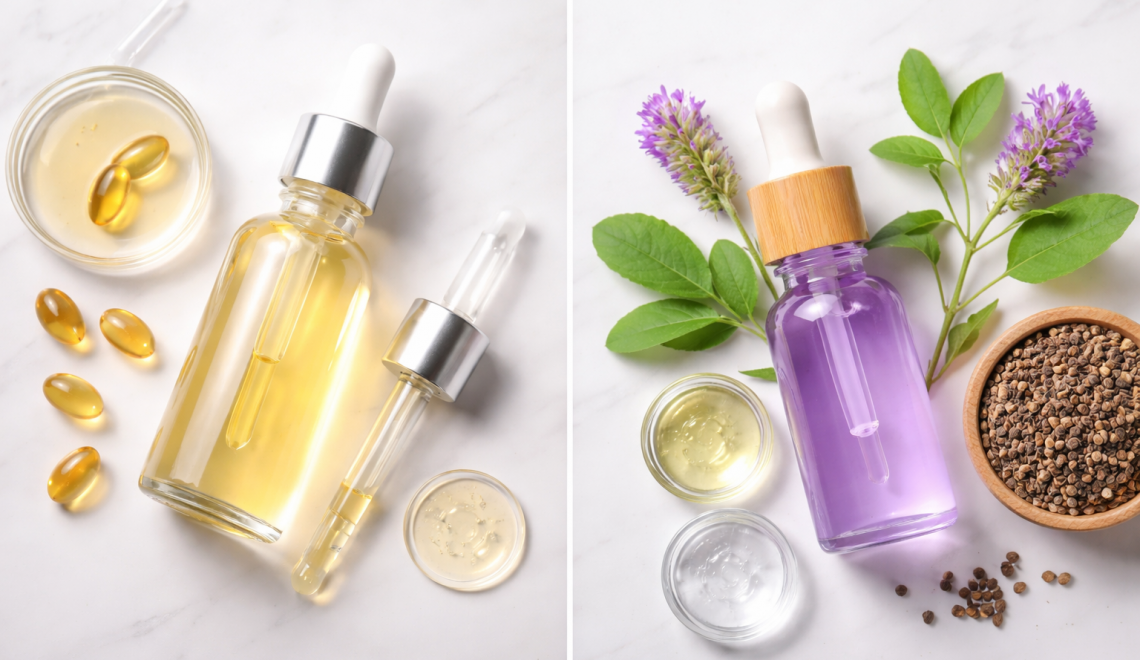
If you’ve started exploring anti-aging skincare, chances are you’ve come across two ingredients again and again: retinol and bakuchiol.
Retinol has long been considered the gold standard for reducing fine lines and improving skin texture. But in recent years, bakuchiol — a plant-based alternative — has gained popularity as a gentler, more sustainable option.
If you’ve started exploring anti-aging skincare, chances are you’ve come across two ingredients again and again: retinol and bakuchiol.
Retinol has long been considered the gold standard for reducing fine lines and improving skin texture. But in recent years, bakuchiol — a plant-based alternative — has gained popularity as a gentler, more sustainable option.
Quick Comparison: Retinol vs Bakuchiol
Quick Comparison: Retinol vs Bakuchiol
| Feature | Retinol | Bakuchiol |
|---|---|---|
| Source | Synthetic vitamin A derivative | Plant-derived (Babchi plant) |
| Irritation Risk | Moderate–High | Low |
| Safe During Pregnancy | No | Often considered safer* |
| Sun Sensitivity | Yes | No |
| Suitable for Sensitive Skin | With caution | Yes |
| Research Depth | Extensive (30+ years) | Growing (promising studies) |
| Sustainability | Brand dependent | Often marketed as eco-friendly |
*Always consult your GP before using actives during pregnancy.
What Is Retinol?
Retinol is a vitamin A derivative belonging to a group called retinoids, which accelerate cell turnover and stimulate collagen production.. It is one of the most studied topical anti-aging ingredients available over the counter.
How Retinol Works
- Retinol penetrates the skin.
- It converts into retinoic acid (the biologically active form).
- Retinoic acid binds to receptors in skin cells.
- This triggers increased cell turnover and collagen production.
What That Means in Simple Terms
- Old, dull cells shed faster.
- Stimulates collagen and elastin production
- Reduces pigmentation
- Unclogs pores
- Smooths fine lines
Because of this, retinol is widely considered the most effective over-the-counter anti-aging ingredient available.
Benefits of Retinol
Retinol is commonly used to:
- Reduce fine lines and wrinkles
- Improve uneven skin tone
- Fade hyperpigmentation
- Support acne treatment
- Refine skin texture
- Boost collagen production
For many people, consistent use leads to visibly smoother, clearer skin within 8–12 weeks.
Retinol remains the benchmark ingredient against which new anti-aging compounds are measured.
Common Side Effects of Retinol
Despite its effectiveness, retinol isn’t suitable for everyone. When starting retinol, many people experience “retinisation,” which may include:
- Dryness
- Flaking
- Redness
- Sensitivity
- Increased sensitivity
Because retinol increases cell turnover, it can temporarily weaken the skin barrier when first introduced — which is why beginners are advised to start with low concentrations (0.1–0.3%) and use it 1–2 times per week.
Retinol also increases sun sensitivity — daily SPF is essential.
It’s also not recommended during pregnancy or breastfeeding unless approved by a healthcare professional.
Sustainability Considerations
Retinol is usually synthetically produced in laboratories. While this allows for controlled production, there are some sustainability considerations:
- It requires stabilised packaging to prevent degradation
- It increases sun sensitivity, requiring diligent SPF use
- Many retinol products are packaged in non-recyclable air-tight pump systems
That said, synthetic production can sometimes have a lower environmental footprint than over-harvested plant alternatives — so sustainability depends largely on brand ethics than the ingredient itself.
What Is Bakuchiol?
Bakuchiol is a plant-derived compound extracted from the seeds and leaves of the Babchi plant (Psoralea corylifolia). It has been used in traditional Ayurvedic and Chinese medicine for centuries.
In modern skincare, bakuchiol is praised as a natural alternative to retinol because it delivers similar anti-aging benefits – without the irritation.
How Bakuchiol Works
Although bakuchiol is not chemically related to retinol, research shows that it activates similar pathways in the skin.
Bakuchiol :
- Stimulates collagen production
- Reduces fine lines
- Improves pigmentation
- Enhances elasticity
Unlike retinol, bakuchiol does not increase skin cell turnover aggressively – which is why irritation risk is significantly lower.
Is Bakuchiol as Effective as Retinol?
A 2018 clinical study published in the British Journal of Dermatology compared bakuchiol (0.5%) with retinol (0.5%) over 12 weeks.
Results showed:
- Both significantly reduced wrinkles
- Both improved hyperpigmentation
- Retinol caused more scaling and irritation
This suggests that bakuchiol may deliver comparable anti-aging results with better tolerance, particularly for sensitive skin types.
However, retinol still has decades of research behind it — making it the more extensively proven option overall. If your skin tolerates retinol well, it may produce faster results. But if irritation is a concern, bakuchiol offers a compelling alternative.
Benefits of Bakuchiol
Bakuchiol is ideal for those who:
- Have sensitive or reactive skin
- Experience irritation from retinol
- Prefer plant-based skincare
- Want a gentler anti-aging approach
It is also:
- Often considered pregnancy-friendly (always check with your GP)
- Anti-inflammatory
- Antioxidant-rich
- Suitable for day and night use, and does not increase UV sensitivity.
Sustainability Benefits
Bakuchiol is often marketed as more sustainable because it is:
- Used in vegan formulations
- Plant-derived
- Biodegradable
However, sustainability depends on ethical sourcing and farming practices. Responsible harvesting of the Babchi plant is essential to prevent environmental damage.
Many clean beauty brands combine bakuchiol with recyclable packaging and refill systems — making it popular among conscious consumers.
When choosing bakuchiol, look for brands that emphasise:
- Sustainable sourcing
- Transparent supply chains
- Recyclable packaging
Sustainable skincare is about the full lifecycle — not just the ingredient.
Retinol vs Bakuchiol: Side-by-Side Comparison
Here’s a simplified breakdown of how they compare:
| Feature | Retinol | Bakuchiol |
|---|---|---|
| Source | Synthetic vitamin A derivative | Plant-derived |
| Irritation Risk | Moderate to high | Low |
| Safe in Pregnancy | No | Often yes* |
| Sun Sensitivity | Yes | No |
| Suitable for Sensitive Skin | Sometimes | Yes |
| Clinical Research | Extensive | Growing |
| Sustainability | Brand-dependent | Often higher |
*Always consult a healthcare professional.
Retinol:
- Converts into retinoic acid
- Directly increases cell turnover
- Strong collagen stimulation
- Higher irritation potential
Bakuchiol:
- Activates similar gene pathways
- Supports collagen production
- Antioxidant protection
- Minimal barrier disruption
Think of retinol as a fast-acting trainer pushing your skin hard.
Bakuchiol is gentler with steady improvement.
How Long Do Results Take?
Retinol may show slightly faster textural changes due to increased cell turnover.
Bakuchiol often produces similar wrinkle improvement over time – with fewer side effects.
Consistency matters more than speed.
Which Is Better for Sensitive Skin?
If you have sensitive, rosacea-prone, or reactive skin, bakuchiol is generally the safer starting point.
Retinol can be used on sensitive skin, but it requires:
- Daily SPF use
- Very low concentrations (0.1–0.3%)
- Gradual introduction. Use it once or twice weekly
- Strong moisturiser support
Bakuchiol, on the other hand:
- Can be used daily
- Does not increase sun sensitivity
- Is less likely to disrupt the skin barrier
For many beginners, starting with bakuchiol helps build tolerance before eventually trying retinol.
How to Build a Routine with Retinol or Bakuchiol
Evening Retinol Routine
- Gentle cleanser
- Pat skin dry
- Pea-sized retinol
- Moisturiser
- (Optional) Barrier cream
Use 1–3 times weekly initially.
Daily Bakuchiol Routine
Morning:
- Cleanser
- Bakuchiol serum
- Moisturiser
- SPF
Evening:
- Cleanser
- Bakuchiol
- Moisturiser
Bakuchiol is generally safe for daily use.
Can You Use Retinol and Bakuchiol Together?
Emerging research suggests that bakuchiol may help stabilise retinol and reduce irritation when used together.
Some dermatologists recommend combining them to:
- Enhance anti-aging benefits
- Improve tolerance
- Support collagen production
However, this approach is best suited for experienced users.
If you’re new to actives, start with one ingredient first and monitor your skin’s response.
Always patch test before introducing new combinations.
Which Ingredient Is More Sustainable?
Sustainability is not just about whether an ingredient is plant-based or synthetic. It includes:
- Ethical sourcing
- Carbon footprint
- Packaging materials
- Product longevity
- Brand transparency
Bakuchiol often appeals to eco-conscious consumers because it is plant-derived and commonly used in vegan skincare.
However, overharvesting plant ingredients can also harm ecosystems.
Retinol, while synthetic, may have a more controlled production process with less land use — depending on the manufacturer.
The most sustainable choice ultimately depends on the brand’s overall practices rather than the ingredient alone.
How to Choose the Right Ingredient for You
Here’s a simple decision guide:
Choose Retinol If:
- You want faster, clinically proven results
- You’re targeting acne and wrinkles
- Your skin tolerates active ingredients
- You’re not pregnant or breastfeeding
Choose Bakuchiol If:
- You have sensitive or reactive skin
- You prefer plant-based skincare
- You want a gentler daily option
- You value sustainable beauty
There is no universal “better” ingredient — only the one that aligns with your skin type and values.
Final Verdict: Retinol or Bakuchiol?
Retinol remains the most researched and powerful over-the-counter anti-aging ingredient available. It works quickly and effectively when used correctly.
Bakuchiol, however, offers a gentler, more accessible alternative – particularly for sensitive skin and those seeking plant-based formulations.
If your skin tolerates retinol, it may provide slightly faster results.
If you struggle with irritation or want a more sustainable routine, bakuchiol may be your perfect match.
Ultimately, sustainable anti-aging isn’t just about reducing wrinkles – it’s about choosing ingredients that support long-term skin health without compromising your wellbeing.
Frequently Asked Questions
Does bakuchiol really work like retinol?
Research suggests bakuchiol activates similar collagen-stimulating pathways and can reduce wrinkles comparably over 12 weeks, with fewer side effects.
Can bakuchiol replace retinol?
For sensitive skin, yes. For maximum evidence-backed potency, retinol still has stronger long-term data.
When should I start using anti-aging ingredients?
Most dermatologists suggest introducing retinol in your mid-20s to early-30s for preventative support.
Can I use bakuchiol every day?
Yes. Bakuchiol can typically be used morning and night without increasing sun sensitivity.
What strength of retinol should beginners use?
Start with 0.1–0.3% once or twice weekly and increase gradually.
Is bakuchiol safer than retinol?
Bakuchiol is generally considered gentler and less irritating than retinol, making it safer for sensitive skin.
Does bakuchiol increase sun sensitivity?
No. Unlike retinol, bakuchiol does not make skin more sensitive to UV rays.
A Gentle Reminder
No ingredient can replace consistent skincare basics:
- Daily SPF
- Balanced diet
- Proper hydration
- Quality sleep
- Stress management
Anti-aging is not about reversing time — it’s about supporting your skin through each stage of life.
And sometimes, the most sustainable routine is simply the one you can maintain consistently.