
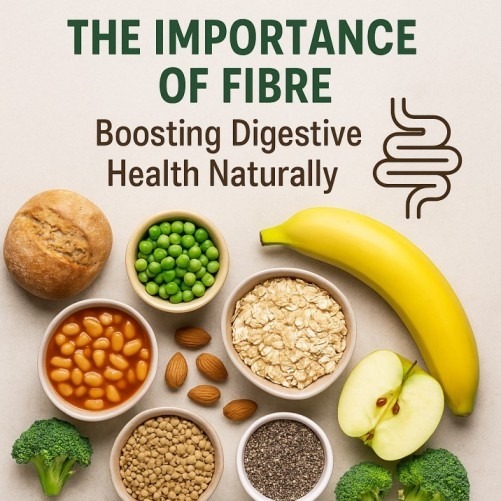
If you’re looking to improve your digestive health and overall wellbeing, one of the most effective and natural solutions is simple: eat more fibre-rich foods. A high fibre diet plays a key role in supporting your gut, reducing digestive issues, and enhancing nutrient absorption. In the UK, where many adults fall short of the recommended daily intake, understanding the benefits of fibre is more important than ever. But what exactly is fibre, and why is it so important for your digestive system?
What Is Fibre and Why Does It Matter?
Dietary fibre is a type of carbohydrate found in plant-based foods that your body can’t fully digest. Instead of being broken down into sugar, it moves through your digestive system intact – helping to keep things running smoothly.
There are two types of dietary fibre, both crucial for gut health:
- Soluble fibre: Forms a gel-like substance in water, helping to control blood sugar and lower cholesterol. Found in foods like oats, apples, beans, and carrots.
- Insoluble fibre: Adds bulk to stool, promoting regular bowel movements. Found in wholemeal bread, nuts, seeds, and vegetables like broccoli and cauliflower.
A well-balanced diet should include both to support digestion and gut microbiome health.
Top Benefits of Fibre for Digestion and Health
✅ 1. Improves Bowel Regularity
One of the most common benefits of fibre is better bowel movement. Fibre helps prevent constipation by softening stool and encouraging a healthy bowel pattern – a crucial part of natural digestive health.
✅ 2. Feeds Good Gut Bacteria
Soluble fibre acts as a prebiotic, fuelling the good bacteria in your gut. These microbes support your immune system and produce short-chain fatty acids that reduce inflammation in the gut.
✅ 3. Reduces Digestive Disorders
A high fibre diet has been shown to lower the risk of conditions like IBS, haemorrhoids, and diverticulitis. Fibre may also help manage symptoms of irritable bowel syndrome, especially when introduced gradually.
✅ 4. Supports Weight Loss and Satiety
Foods high in fibre keep you feeling fuller for longer. This can prevent overeating and support healthy weight management – an important factor in maintaining long-term digestive wellness.
✅ 5. Lowers Cholesterol and Regulates Blood Sugar
Soluble fibre helps reduce LDL (bad) cholesterol and slows sugar absorption, helping with type 2 diabetes management and heart health.
How Much Fibre Do You Need Daily?
The NHS recommends 30g of fibre per day for adults. However, the average UK adult only consumes around 18g. Increasing your fibre intake can drastically improve your gut health and digestion.
Quick Tips to Boost Fibre Intake:
- Choose wholemeal bread over white bread
- Start the day with high fibre cereals like bran flakes or porridge oats
- Include legumes such as lentils and chickpeas in your meals
- Snack on fruit, nuts, and seeds
- Add extra vegetables to every dish
Top Fibre-Rich Foods in the UK
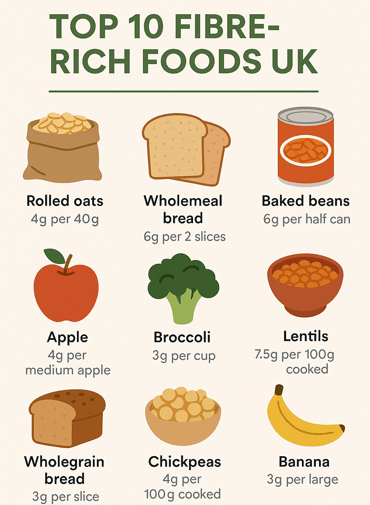
Looking for easy ways to add more fibre to your meals? Here are some common and affordable fibre-rich foods in the UK:
| Food | Fibre Content (per serving) |
| Rolled oats (40g) | ~4g |
| Wholemeal bread (2 slices) | ~6g |
| Baked beans (half can) | ~6g |
| Apple (medium) | ~4g |
| Broccoli (1 cup) | ~3g |
| Lentils (100g cooked) | ~7.5g |
| Chia seeds (1 tbsp) | ~5g |
How to Improve Digestion Naturally with Fibre
Adding more fibre for digestion doesn’t mean you need to overhaul your diet overnight. Instead:
- Increase fibre intake gradually to avoid bloating
- Stay well-hydrated – fibre works best when paired with plenty of water
- Aim for a diverse mix of fruits, vegetables, legumes, and grains
- Focus on whole, unprocessed foods for better nutrient density
Make Fibre Your Digestive Superpower
If you’re on a journey to improve digestion naturally, fibre is your best friend. From enhancing gut health to reducing your risk of chronic conditions, a diet high in fibre is a small change that can lead to big results.
By making simple swaps – like choosing wholegrain bread, snacking on fruit, or adding beans to your meals – you can get closer to the recommended 30g of fibre per day and feel the difference in your energy, digestion, and overall wellness.


